
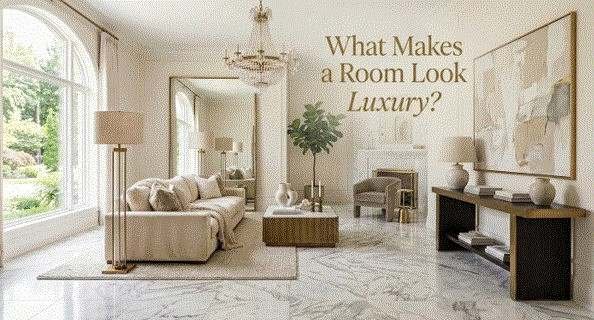
A room looks luxurious when it combines five key elements: high-quality materials, a refined color palette, layered lighting, intentional negative space, and thoughtful details. Premium surfaces like natural stone, marble, and hardwood create the foundation. Colors stay cohesive and sophisticated. Lighting comes from multiple sources at different levels. Space breathes rather than overflows with furniture. And small details like quality hardware and textiles prove the room was designed, not just decorated. When these elements work together, a room feels expensive regardless of the actual budget.
High Quality Materials
Alt Text: A detailed interior shot featuring a marble countertop with brass hardware, hardwood flooring, and textured linen fabrics.
Materials create the first impression of luxury. Surfaces you see and touch daily must feel premium.
Natural stone flooring, marble countertops, or stone accent walls read as high-end instantly. Even marble-look porcelain tiles achieve this effect at a lower price point while maintaining a sophisticated appearance.
Real hardwood floors add warmth and timelessness. Wide plank flooring feels more luxurious than narrow strips. Solid wood furniture outperforms veneer or laminate every time.
Metal accents in brass, gold, or brushed nickel elevate basic cabinetry and furniture. Replacing builder-grade handles with quality metal hardware creates instant impact.
Natural fabrics complete the picture. Linen, silk, velvet, and wool feel rich compared to synthetic alternatives. Invest in quality textiles for curtains, upholstery, and bedding.
The key is authenticity. Real materials or high-quality alternatives always outperform cheap imitations.
Refined Color Palette
Alt Text: A sophisticated room with a neutral gray and cream foundation, accented by a deep navy velvet chair and emerald green artwork.
Luxury rooms use restrained, sophisticated palettes rather than bold or trendy colors.
Neutral foundations work best. Whites, creams, warm grays, and soft beiges create calm, elevated backgrounds. These tones feel timeless rather than dated and photograph beautifully.
Rich accents add depth when used sparingly. Deep navy, emerald green, burgundy, or charcoal bring drama to accent pieces, artwork, or a single statement wall. Limit bold colors to supporting roles.
Metallics introduce subtle glamour. Gold, brass, silver, and bronze appear in hardware, frames, light fixtures, and decorative objects.
Most importantly, all colors should share similar undertones. Mixing warm and cool undertones creates visual tension that feels less polished. A cohesive palette where every color relates to the others defines luxury interiors.
Layered Lighting
Alt Text: A warm evening setting showcasing a statement chandelier, wall sconces, and a table lamp, creating multiple layers of ambient glow
Lighting separates luxury spaces from ordinary ones. High-end rooms never rely on a single overhead fixture.
The layered approach combines three types: ambient lighting from overhead sources, task lighting from lamps and under-cabinet fixtures, and accent lighting from wall sconces and picture lights. This creates depth and flexibility that single-source lighting cannot match.
Statement: fixtures matter. A sculptural chandelier or designer pendant becomes art while serving a function. Every room deserves at least one standout light fixture.
Warm tones feel luxurious. Aim for 2700K to 3000K color temperature. Cool, bluish light feels institutional rather than inviting.
Dimmers transform the atmosphere. The ability to adjust light levels changes a room’s mood entirely. Install dimmers on all overhead fixtures.
Natural light elevates everything. Maximize windows with minimal or sheer treatments. Daylight makes every material and color look better.
Intentional Negative Space
Alt Text: A minimalist room featuring a single designer chair against a large, empty textured wall to emphasize breathing room.
Luxury rooms breathe. Space is a design element, not a wasted opportunity.
Visual rest matters. The eye needs places to pause. Overcrowded rooms feel chaotic regardless of how expensive the contents are.
Space highlights quality. A beautiful chair against an empty wall commands attention. The same chair lost in clutter goes unnoticed. Negative space makes each piece stand out.
Emptiness signals abundance. High-end hotels and showrooms use generous spacing because it communicates resources. Only those with means can afford not to fill every corner.
Editing separates designed spaces from accumulated ones. The discipline to remove unnecessary items elevates any room. When something feels off, the solution is usually subtraction, not better organization.
If your room feels cluttered, remove pieces until you see breathing room between furniture groupings.
Thoughtful Details
Details reveal whether a room was designed or just decorated. Small elements add up to create the overall impression.
Hardware shows attention. Cabinet pulls, door handles, light switch plates, and outlet covers in coordinated finishes demonstrate care. These small investments yield visible returns.
Trim and molding add architecture. Crown molding, baseboards, and door casings make even simple rooms feel elevated. Thoughtful millwork signals quality construction.
Textiles layer richness. Quality curtains that puddle slightly on the floor, plush area rugs, and coordinated throw pillows create depth and comfort.
Art and mirrors complete the walls. Original art or quality prints in proper frames elevate any space. Large mirrors reflect light and expand rooms visually.
Fresh elements bring life. Flowers, plants, or branches signal that someone actively cares for the space.
Mineral Tiles (one of America’s top-selling tile brands) offers a wide selection of tiles that transform floors, walls, and accents with premium materials. For more design inspiration, exploring small kitchen interior design ideas shows how even compact spaces feel high-end with the right choices.
Conclusion
Luxury is not about spending the most money. It is about intentional choices across five key elements. Quality materials create the foundation. A refined palette unifies the room. Layered lighting adds atmosphere. Negative space lets each piece shine. Thoughtful details prove the room was designed. When every choice is deliberate, a room looks and feels expensive regardless of actual budget.
FAQs
Can you make a room look luxurious on a budget?
Yes. Focus spending on visible surfaces like flooring and paint. Choose fewer, better pieces over many cheap ones. Upgrade hardware and textiles. Edit ruthlessly to create breathing room.
What is the most important element for a luxury look?
Materials. High-quality surfaces like stone, wood, and natural fabrics create an expensive foundation that no amount of decor can replicate with cheap alternatives.
What single change makes the biggest luxury impact?
Lighting. Adding layered light sources with dimmers transforms the atmosphere instantly. A statement fixture paired with table lamps elevates any room overnight.
What makes a room look cheap?
Overcrowding, mismatched undertones, visible clutter, single-source harsh lighting, builder-grade hardware, and furniture that prioritizes trends over quality.
Do luxury rooms have to be neutral?
No, but they use color intentionally. Rich jewel tones work beautifully when balanced with neutrals and applied in a cohesive palette with consistent undertones. See more.